
In the world of business, it’s easy to see a bill book as a simple, transactional tool—just a place to jot down sales and expenses. But this perspective is a major oversight. A bill book is far more than a stack of carbon copies; it’s a critical legal document that can protect your business, ensure compliance, and even resolve disputes.
Whether you’re a small retailer or a large service provider, understanding the legal weight of your bill book is essential for secure and professional business operations.
Here’s why your bill book is a crucial legal document and not just a piece of paper:
1. It’s Your Primary Proof of Transaction
In any business, a bill or invoice is the official record of a transaction between a seller and a buyer. It serves as irrefutable proof of the sale, detailing the goods or services provided, the price, the date, and the identities of both parties. In a legal dispute, such as a disagreement over a payment or a product delivery, your bill book entries are your first line of defense. They provide a clear, timestamped record that can be presented in a court of law or to a third-party mediator.
2. Essential for GST and Tax Compliance
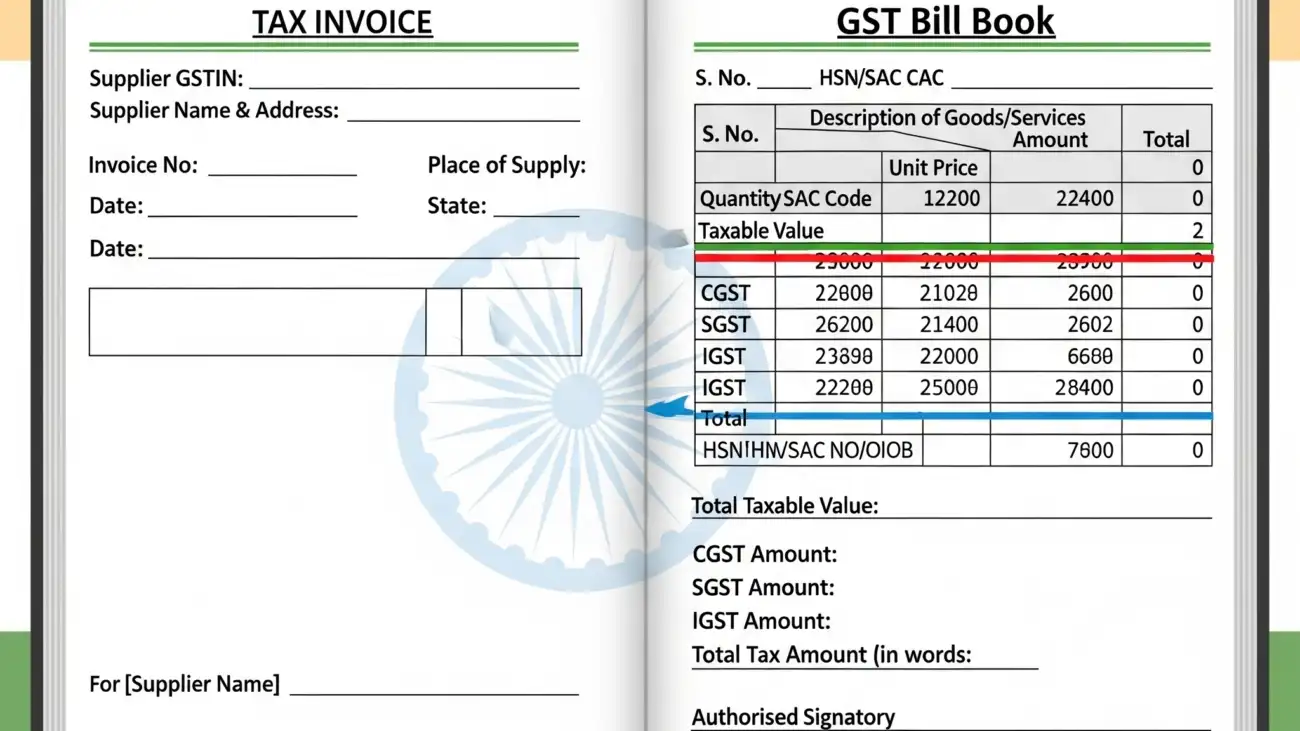
For businesses registered under the Goods and Services Tax (GST) regime, a bill book is the bedrock of compliance. The government mandates that every taxable supply must be supported by a GST-compliant tax invoice. This invoice must contain specific details, including:
- Seller’s and Buyer’s GSTIN
- Invoice number and date
- HSN/SAC code of goods or services
- Taxable value and tax rates (CGST, SGST, IGST)
- Total amount
A properly maintained bill book ensures that every transaction is accounted for and accurately documented, which is non-negotiable for filing your GST returns (GSTR-1, GSTR-3B) and avoiding penalties.
3. It Serves as a Guarantee for Customers
A professional, well-documented bill reassures your customers. It’s not just a receipt; it’s often the customer’s only proof of purchase. This is vital for them to claim a warranty, exchange a product, or request a refund. By providing a proper bill, you establish trust and demonstrate a commitment to your customers, which can lead to repeat business and positive word-of-mouth.
4. Protects Against Fraud and Discrepancies
A systematic bill book with sequential numbering helps you maintain an audit trail. This makes it incredibly difficult for internal fraud to go unnoticed and helps you quickly identify any missing or duplicated invoices. By cross-referencing your bill book with your inventory and bank statements, you can spot discrepancies and ensure all sales are correctly recorded. This is a simple but powerful internal control mechanism.
5. Crucial for Business Audits
Whether it’s a government tax audit or an internal financial review, your bill book is one of the first documents auditors will ask to see. They use it to verify your reported income, validate tax claims, and ensure that your financial statements are accurate. A messy or incomplete bill book can raise red flags, leading to more extensive scrutiny and potential penalties. A well-maintained and organized bill book, whether physical or digital, makes the audit process smooth and hassle-free.
Conclusion:
A bill book is much more than a collection of papers—it’s the backbone of your business’s financial and legal integrity. It’s the proof of your transactions, your shield against legal disputes, and your primary tool for tax compliance.
In today’s digital age, while many are moving towards digital invoicing, the principles remain the same. Whether you use a physical bill book or a modern digital invoicing app, the key is to treat every invoice as a crucial legal document. By doing so, you’re not just recording sales; you’re building a foundation of transparency, trust, and security for your business.